
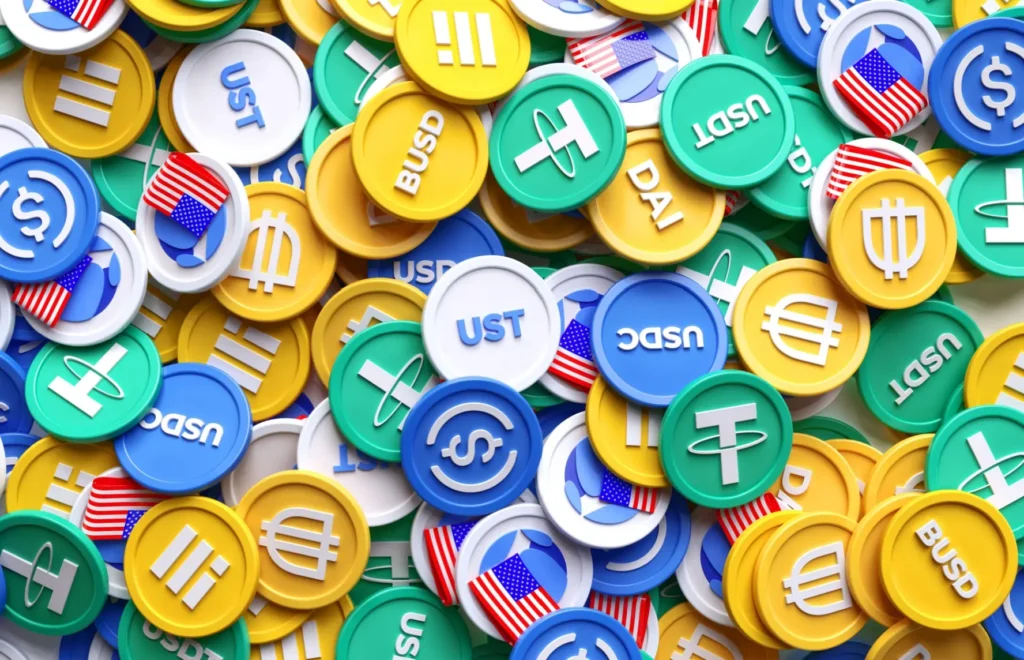
Why Everyone’s Suddenly Talking About Stablecoins
While Bitcoin may be called “digital gold” and Ethereum praised for powering decentralized applications, it’s stablecoins—crypto’s steady, dollar-pegged assets—that have emerged as the unsung heroes of the blockchain world. For years, stablecoins were quietly powering the crypto economy behind the scenes, acting as a safe haven for traders and a tool for global payments.
But today, stablecoins are stepping onto the global financial stage, no longer just a crypto convenience but a serious contender in the future of money.
The spark? Circle’s planned IPO, followed by massive moves from giants like PayPal and consistent adoption in emerging markets. Add to that the growing wave of regulation, and suddenly, stablecoins are no longer just a crypto story—they’re part of a global financial transformation.
Let’s dive deeper into why stablecoins are the biggest bet in crypto right now—and why they’re quickly becoming a critical bridge between the traditional and decentralized worlds.
Circle’s IPO: Stablecoins Are Going Public
In early 2024, Circle Internet Financial filed confidentially for an initial public offering (IPO) with the U.S. Securities and Exchange Commission (SEC). Circle is the issuer of USD Coin (USDC), the world’s second-largest stablecoin by market cap, with billions of dollars in daily transaction volume. Unlike Tether (USDT), Circle has emphasized transparency, publishing regular attestations to show that USDC is fully backed by cash and short-term U.S. Treasuries.
But why does going public matter? Because Circle’s IPO will be the first time a major stablecoin issuer fully integrates into the U.S. regulated financial markets. It sends a signal that stablecoins are here to stay—and that the future of global finance might very well be tokenized dollars moving instantly across blockchain rails.
A successful IPO could:
-
Bring new institutional investors into the crypto economy through traditional stock markets.
-
Pressure other stablecoin issuers (like Tether) to improve transparency.
-
Spark further regulatory engagement, helping define legal standards for stablecoin issuers globally.
If successful, Circle’s IPO could be the turning point where stablecoins stop being just crypto’s plumbing—and start becoming the pipes of global finance.
Big Finance Isn’t Waiting—They’re Building
The big banks and fintechs aren’t watching from the sidelines—they’re moving in.
-
PayPal launched PYUSD in August 2023, fully backed by dollars and Treasuries, with issuance handled by Paxos Trust. While adoption has been gradual, PayPal’s 400+ million global users represent a massive potential stablecoin audience.
-
Tether (USDT) remains dominant in emerging markets, with over $100 billion in circulation by mid-2025. Despite criticisms around transparency, USDT remains the “dollar of crypto” for everyday transactions in regions facing inflation or dollar shortages.
-
Visa and Mastercard have tested stablecoin settlement rails, allowing select merchants to receive payments in stablecoins rather than traditional fiat.
-
Banks like JPMorgan have explored stablecoin alternatives, including JPM Coin for institutional settlements between major clients.

The race isn’t just about payment speed—it’s about control of the future of money. Stablecoins solve a decades-old fintech problem: how to move dollars globally, instantly, and cheaply, outside the friction of legacy banking.
Regulation: The Defining Force for Stablecoin’s Future
For stablecoins to become truly mainstream, clear and consistent regulation is essential. And finally, it’s arriving—but not without challenges.
-
Europe’s MiCA regulation (Markets in Crypto-Assets), which went into effect in 2024, established clear standards for stablecoin issuers operating in the European Union. Issuers must hold full reserves, regularly disclose financials, and meet anti-money laundering (AML) requirements. MiCA represents the first large-scale regulatory framework for crypto in the developed world.
-
In the U.S., competing legislative proposals have emerged. One of the most prominent—supported by Treasury officials—requires stablecoin issuers to be licensed and insured like traditional banks. This approach could open the door for FDIC-insured stablecoins, making them even more attractive for institutional adoption.
-
Asia is also leading innovation. Japan already allows licensed banks and trust companies to issue stablecoins, with regulators encouraging tokenized financial instruments. Singapore has embraced regulated digital assets through its progressive Monetary Authority of Singapore (MAS).
What’s at stake here? Regulatory clarity could unlock trillions of dollars of institutional capital, particularly from pension funds, sovereign wealth funds, and conservative asset managers who have so far avoided crypto due to regulatory ambiguity.
But with clarity also comes competition—between highly regulated stablecoins (USDC, PYUSD) and less regulated ones (USDT), which will likely continue to dominate in emerging and informal markets.
Why Stablecoins Matter More Than Ever
It’s not just crypto traders who care about stablecoins anymore. Here’s why they’re rapidly becoming critical financial infrastructure:
-
Cross-Border Payments: Sending money internationally through banks can take days and cost up to 7% of the total value. Stablecoins can settle in seconds for fractions of a cent. This isn’t theoretical—remittance corridors in Africa, Asia, and Latin America are already using stablecoins to bypass banks.
-
Emerging Market Use: In countries with hyperinflation or currency devaluation, stablecoins provide a life raft. In Argentina, Nigeria, and Turkey, stablecoin usage is exploding—not for speculation, but for survival.
-
DeFi’s Foundation: Stablecoins power lending, borrowing, and trading across decentralized finance platforms. Without stablecoins, the vast majority of DeFi activity would grind to a halt.
-
Bridging Traditional Finance (TradFi) and Crypto: As regulated stablecoins increase, more banks will integrate blockchain for settlement, moving money faster and more efficiently than traditional wire systems.
-
Stepping Stone to CBDCs: Governments worldwide are developing central bank digital currencies (CBDCs), and stablecoins are effectively proving the concept before governments launch official versions.

Of course, it’s not all smooth sailing. Major risks for stablecoins include:
-
Regulatory Fragmentation: If global regulations diverge too widely, stablecoin issuers will face costly compliance burdens.
-
Centralization Concerns: Critics argue that regulated stablecoins, controlled by large companies, contradict crypto’s decentralization ethos.
-
Competition from CBDCs: Once major governments launch CBDCs, they could crowd out private stablecoin usage—though that’s likely still several years away.
The Next 5 Years: What to Expect
The stablecoin ecosystem of 2025 is just the beginning. Over the next five years, we’re likely to see:
-
Public market listings (like Circle) bringing billions in fresh capital into the sector.
-
Mergers between fintech firms and crypto platforms, using stablecoins to expand global payments.
-
Central banks actively cooperating with stablecoin issuers to test cross-border payments infrastructure.
-
Emergence of new stablecoin types—for example, Euro-pegged stablecoins gaining ground in Europe, or commodity-backed stablecoins for emerging markets.
Conclusion: Stablecoins Are Quietly Taking Over
In the hype cycles of crypto, stablecoins rarely get the spotlight—but they’re the most practical and transformational innovation yet. Forget volatile meme coins or speculative altcoins—stablecoins are crypto’s killer app, offering real-world value to billions of people.
With Circle’s IPO poised to take USDC mainstream, PayPal and fintech giants entering the fray, and regulators finally providing clarity, stablecoins are no longer just part of the crypto ecosystem—they’re shaping the future of global finance itself.
If you’re watching the crypto industry to find the next big thing, don’t just look at Bitcoin’s price chart. Watch stablecoins. They’re already quietly building the next financial system.